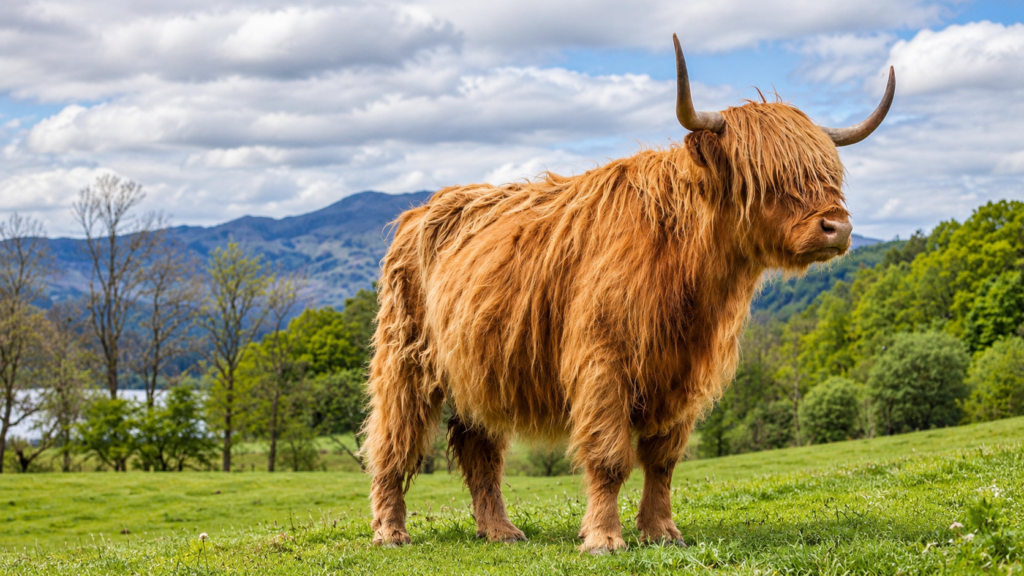
Choosing between a Mini Highland cow and a Dexter cow comes down to more than appearance or advertised size. Dexter cattle are an established small breed with a history of milk and beef production. Mini Highlands are generally smaller-framed Highland or Highland-type cattle, but the miniature label does not represent one universally standardized breed.
Both may suit smaller livestock operations, depending on the individual animal and the owner’s facilities.
The important differences involve breeding background, mature frame, coat characteristics, horn status, production goals, and handling requirements.
This comparison explains what buyers should evaluate before choosing either type, including the information worth requesting from a breeder.
Mini Highland vs. Dexter: Key Differences at a Glance
| Feature | Mini Highland | Dexter |
|---|---|---|
| Breed classification | Descriptive miniature label; ancestry varies | Established cattle breed |
| Appearance | Highland-type appearance, often with a long coat | Compact cattle with a generally shorter coat |
| Mature size | Varies; no universal miniature standard | Small cattle breed; individual variation |
| Coat | Often long and shaggy | Generally short and smooth |
| Horns | Often horned; verify individually | Horned and polled animals occur |
| Traditional use | Depends on ancestry and breeding objectives | Historically dual-purpose: milk and beef |
| Temperament | Depends on individual animal and handling | Depends on individual animal and handling |
| Grooming | Long coats may require more attention | Generally less coat maintenance |
| Pasture needs | Depends on body size, forage, and herd | Depends on body size, forage, and herd |
| Buyer appeal | Highland appearance and individual miniature characteristics | Established small breed and production versatility |
Neither option is automatically better. The right choice depends on what you want the cattle to do and whether your property can support them.
1. Breed Background: What Are You Actually Buying?
The first difference is breed identity.
Dexter cattle originated in Ireland and developed as a relatively small, versatile cattle breed. In the United States, the American Dexter Cattle Association maintains breed information and registration resources.
A registered Dexter has a documented identity within an established breed system, although registration alone does not guarantee temperament, health, or suitability for a particular farm.
Highland cattle are also an established breed, recognized for their long coats, horns, and adaptation to demanding environments.
However, Mini Highland is not a separate, universally standardized breed classification.
Some animals marketed as Mini Highlands are smaller-framed purebred Highland cattle. Others may have mixed ancestry intended to produce a Highland-type appearance in a smaller animal.
This distinction matters because appearance does not prove pedigree.
A buyer interested in registered breeding stock should request appropriate documentation. A buyer primarily interested in a smaller Highland-type animal should still ask about parentage and actual mature measurements.
The American Highland Cattle Association provides information about traditional Highland breed characteristics.
2. Size and Weight: Which Animal Is Actually Smaller?
Dexters are an established small cattle breed. Mini Highlands are marketed as smaller cattle, but their mature size varies according to breeding background.
That makes a universal size ranking unreliable.
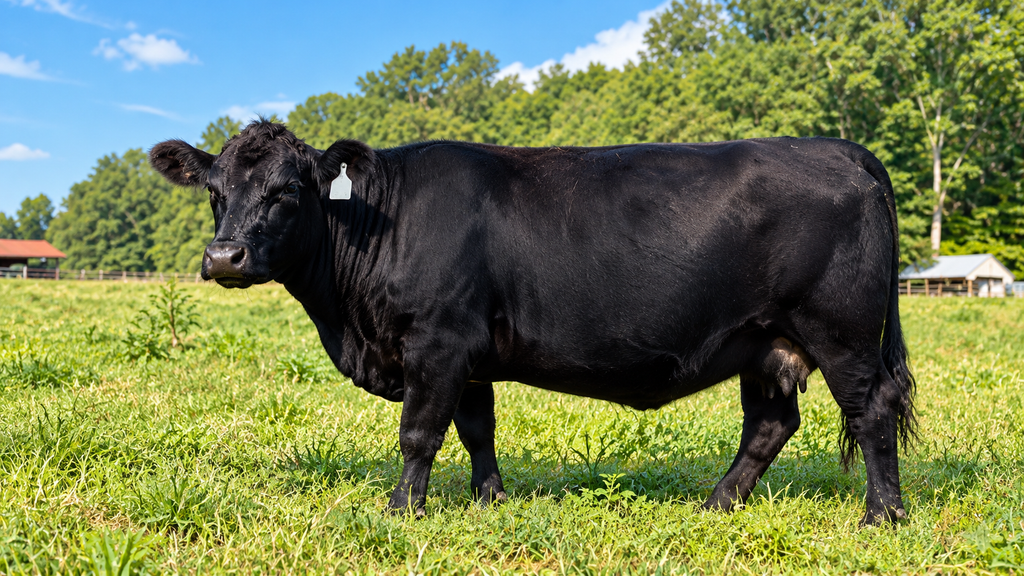
A particular mature Mini Highland may be shorter than a particular Dexter. Another Mini Highland may be taller or heavier.
Why Height Alone Is Not Enough
Two cattle with similar heights may have different body lengths, chest depths, and muscle development.
A heavier animal may require different handling equipment and transportation arrangements even if it is not noticeably taller.
Sex and maturity also matter. Comparing a young heifer with a mature bull provides little useful information about the typical size of either breed.
For an accurate comparison, request the animal’s current age, measured height, actual or estimated weight, and mature parent measurements.
If you’re specifically evaluating Highland-type cattle, our Mini Highland cow size guide explains how growth and measurement methods affect mature-size estimates.
3. Appearance, Coat, and Horns
Appearance is one of the clearest differences between these cattle types.
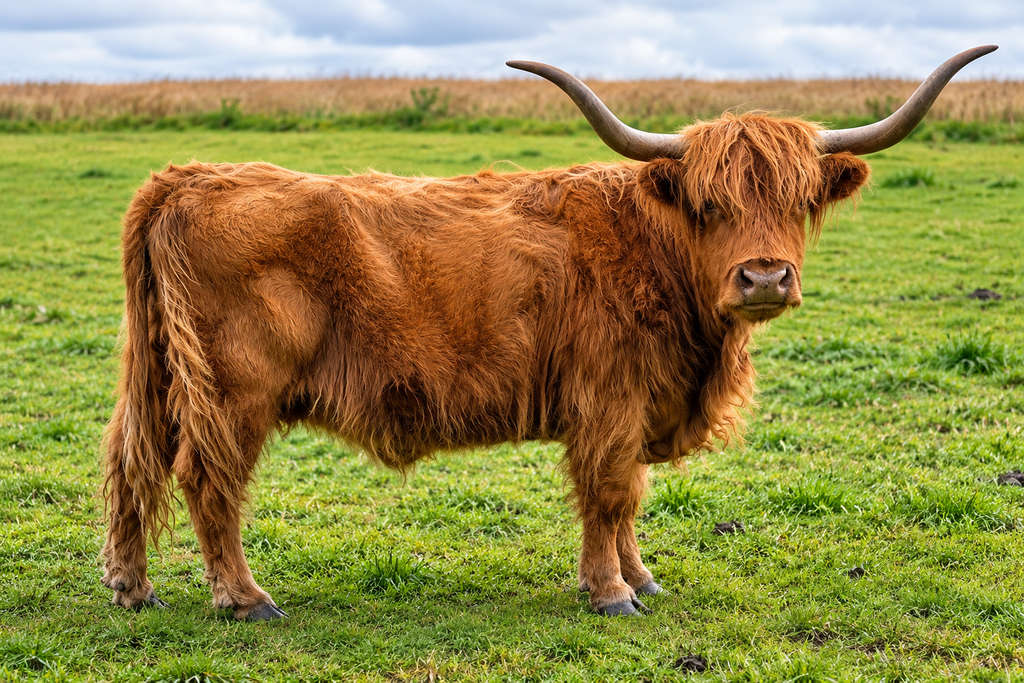
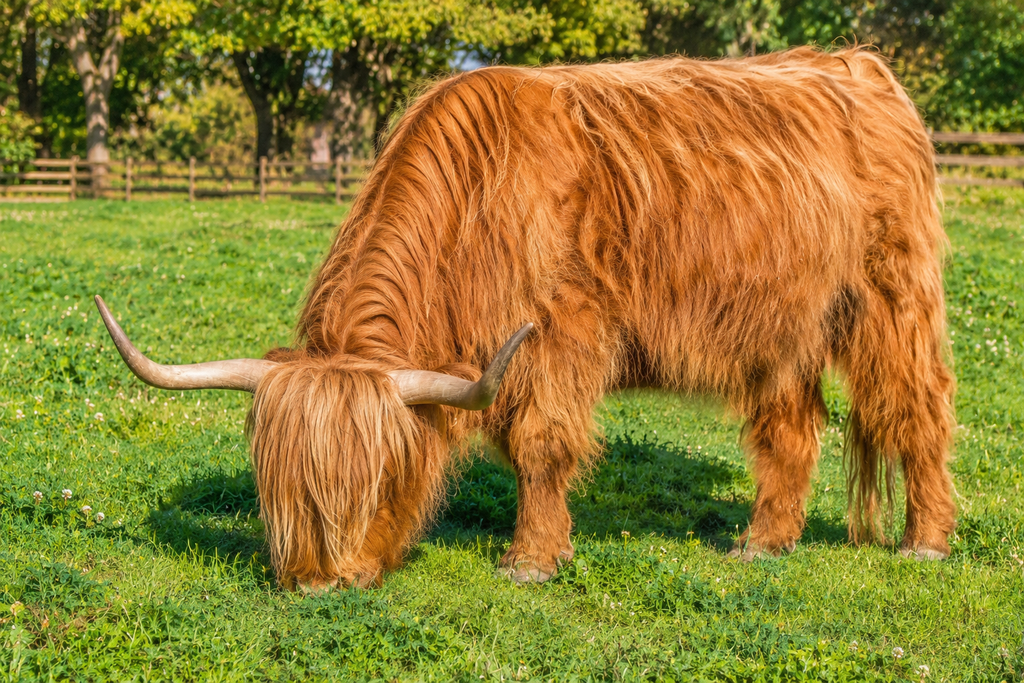
Highland cattle are recognized for their long, shaggy coats, prominent forelocks, and distinctive horns.
Animals marketed as Mini Highlands often retain those characteristics, although mixed ancestry can produce considerable variation.
Dexters generally have shorter coats and a more compact appearance.
Both horned and polled Dexter cattle exist. Highland cattle are characteristically horned, but individual Highland-type animals may differ because of breeding background or management.
Buyers should verify horn status rather than relying on breed labels.
Does Coat Type Affect Management?
A long coat can require additional attention, especially when checking for parasites, skin problems, or matting.
In warm climates, shade, water, ventilation, and appropriate management become particularly important.
Shorter-coated Dexter cattle may require less coat maintenance, but that does not eliminate the need for routine inspection.
Both types need suitable fencing and safe handling arrangements. Horned cattle may require additional consideration when designing gates, feeders, and handling spaces.
4. Temperament and Handling: Which Is Easier to Manage?
Neither breed can be described as universally calmer or easier to handle.
Temperament varies between animals and is influenced by genetics, age, sex, previous handling, and management.
A well-handled Dexter may be easier for a beginner to manage than a poorly socialized Mini Highland. The opposite may also be true.
Breed reputation should not replace an individual assessment.
What Should Buyers Look For?
Ask how the animal behaves during ordinary farm activities.
Can it be approached safely? Is it accustomed to people? Has it been handled regularly? How does it respond when moved through gates or into a handling area?
A calm animal should not be confused with an animal that is simply inactive or unwell.
For inexperienced owners, an animal with a documented history of safe, routine handling may be more suitable than one selected solely for appearance.
Intact bulls require particular care. Their strength and behavior can create serious risks, regardless of whether they belong to a smaller cattle breed.
Before buying, make sure your facilities and handling experience are appropriate for the specific animal.
5. Feeding, Pasture, and Everyday Care
Both Dexter and Highland-type cattle are grazing livestock.
They need appropriate forage, clean water, mineral supplementation suited to their diet, routine health care, and suitable facilities.
Their actual nutritional needs depend on body size, age, reproductive status, body condition, and the quality of available feed.
A smaller animal may consume less feed than a substantially larger animal, but there is no universal feeding allowance based solely on the word miniature.
Pasture Requirements
Stocking capacity depends on pasture productivity, rainfall, soil conditions, grazing season, and herd size.
A small pasture with poor forage may require more supplemental feeding than a larger, productive pasture.
The USDA Natural Resources Conservation Service provides grazing and conservation resources. Local agricultural extension offices can help owners evaluate pasture capacity.
Climate and Shelter
Highland cattle have coats associated with their traditional adaptation to cold and challenging environments. However, a thick coat does not mean they can be managed without shade or heat-stress precautions in warmer parts of the United States.
Dexters also require suitable shelter and protection from extreme weather.
Neither breed should be purchased on the assumption that it can live outdoors without appropriate management.
For general miniature cattle care considerations, visit our Mini Cow Care guide.
6. Dexter Cattle for Milk and Meat vs. Mini Highlands for Different Ownership Goals
The intended purpose of the cattle may be the deciding factor.
Dexters have a documented history as a dual-purpose breed, meaning they have traditionally been kept for both milk and beef production.
That does not mean every Dexter cow is a productive dairy animal. Milk production depends on genetics, health, feeding, reproductive status, and management.
Buyers interested in household milk production should ask about the specific cow’s production history, udder characteristics, and suitability for milking.
Highland cattle also have an established history of beef production.
However, animals marketed as Mini Highlands may have different breeding backgrounds and may be selected for different characteristics.
Some owners seek Highland-type cattle for a small breeding herd or pasture companionship. Others may have livestock-production goals.
Neither objective should be assumed from the animal’s appearance.
A prospective buyer should establish the intended purpose first, then evaluate whether the individual animal has the appropriate characteristics and documented history.
7. Which Is Better for a Small Farm or Homestead?
The better choice depends on the property, owner’s experience, and intended use.
For First-Time Cattle Owners
Choose based on temperament, handling history, and the availability of suitable facilities.
A manageable steer or calm female may be more appropriate than an intact bull for some beginners.
For Homesteaders Interested in Milk
Dexter cattle deserve consideration because of their established dual-purpose history.
However, buyers should evaluate the actual cow’s production characteristics rather than assuming every Dexter is suited to a family milking operation.
For Buyers Interested in Highland Appearance
A Mini Highland or Highland-type animal may be appealing because of its long coat and distinctive appearance.
Buyers should confirm mature size, ancestry, and horn status before making a decision.
For Properties With Limited Pasture
Neither breed automatically solves a shortage of grazing land.
Assess forage production, supplemental feeding requirements, water access, and the number of cattle the property can support.
For Breeding Programs
Breed documentation and genetic background become especially important.
A buyer planning to raise registered Dexter cattle should understand registration requirements and applicable breed health considerations.
A buyer interested in Highland breeding should clarify whether the animals are registered purebreds or Highland-type cattle with mixed ancestry.
8. What Should You Check Before Buying Either Type?
Before committing to either animal, request information that can be verified.
| What to check | Why it matters |
|---|---|
| Animal identification and age | Confirms which animal is being offered and its stage of development |
| Sex and reproductive status | Affects handling, management, and breeding plans |
| Current height and weight | Helps assess facilities and transportation needs |
| Parentage and registration | Clarifies ancestry and documented breed status |
| Health and veterinary records | Supports informed purchasing and movement planning |
| Temperament and handling history | Helps assess suitability for the buyer |
| Horn status | Important for facilities and safety |
| Breeding suitability | Relevant to reproductive goals and breed-specific considerations |
| Transportation arrangements | Helps confirm the receiving property is prepared |
| Written purchase terms | Clarifies the transaction and ownership transfer |
For registered breeding cattle, ask about relevant breed-specific genetic testing and inherited conditions. Dexter buyers, for example, should understand testing and breeding implications associated with chondrodysplasia and pulmonary hypoplasia with anasarca (PHA), where applicable.
A veterinarian and the relevant breed association can help interpret testing information.
For more detailed purchasing guidance, read How to Buy a Mini Cow in the USA.
9. Explore Mini Highland Cattle at Mini Moo Alpaca Too Farm
Mini Moo Alpaca Too Farm is based in Monticello, Florida, and focuses on Mini Highland, HighPark, and other miniature cattle for prospective buyers throughout the United States.
Prospective buyers can review individual animal profiles and contact the farm to ask about available information, including age, breed, sex, color, and current status.
Scheduled farm visits and personally arranged transportation can be discussed as part of the inquiry process.
The farm’s cattle profiles provide a starting point for evaluating individual animals rather than relying on general breed descriptions.
Visit Mini Moo Alpaca Too Farm to explore the farm and inquire about miniature cattle.
10. Frequently Asked Questions
Are Dexter cows smaller than Mini Highland cows?
Not necessarily. Dexter is an established small cattle breed, while Mini Highland is a descriptive label covering animals with varying ancestry and frame sizes. Compare mature measurements rather than relying on breed names alone.
Are Mini Highland and Dexter cattle the same breed?
No. Dexter is a distinct recognized cattle breed. Mini Highland generally refers to smaller Highland or Highland-type cattle and is not one universally standardized separate breed.
Which cattle are better for beginners?
Neither is automatically better. Temperament, previous handling, horn status, sex, and the owner’s facilities matter more than breed labels alone.
Do Dexter cows produce milk?
Yes. Dexter cattle have traditionally been used for milk and beef production. Actual milk yield and suitability for hand or machine milking vary between individual cows.
Are Mini Highland cows naturally polled?
Traditional Highland cattle are characteristically horned. Some Highland-type cattle may be polled or dehorned, depending on ancestry and management. Verify the individual animal’s horn status.
Which type needs more grooming?
Highland-type cattle with long coats may require more coat inspection and maintenance than shorter-coated Dexter cattle. Actual care depends on the animal, environment, and management.
Can Dexter and Highland cattle live together?
They can potentially be managed in the same herd, provided animals are compatible, and facilities, nutrition, breeding management, and health precautions are appropriate. Introductions should be supervised.
Which is better for a small homestead?
Dexters may suit owners seeking an established small dual-purpose breed. Mini Highlands may appeal to owners seeking Highland-type characteristics. The best choice depends on individual cattle and the homestead’s goals.
11. Final Verdict: Mini Highland or Dexter?
In a Mini Highland cow vs. Dexter cow comparison, the most important difference is not simply which animal is smaller.
Dexter cattle offer the predictability of an established breed identity and a history of dual-purpose production. Mini Highlands offer Highland-type characteristics, but their mature size and ancestry require individual verification.
Neither option removes the need for proper fencing, pasture management, veterinary care, and safe handling.
Choose the animal that fits your ownership goals, facilities, and experience—not the one with the most appealing marketing label.
To learn more about Highland-type miniature cattle, explore Mini Moo Alpaca Too Farm and contact the farm about individual animals.